
The Encampments Are Gone. The Hostility Isn’t.
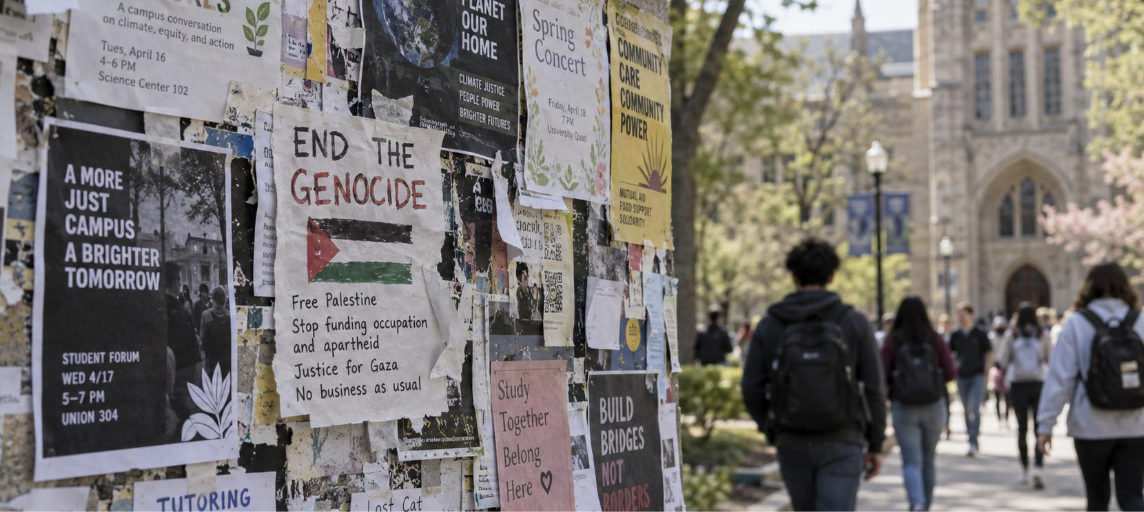
AI-generated illustration. Fictional scene, not an image of the incidents described.
On campuses where the tents have disappeared, it is tempting to assume that things have calmed down. But an empty quad does not tell the whole story.
Reports around the October 7 anniversary show why. The hostility did not disappear. In these cases, it was quieter, more personal, and harder to see.
Haverford College
A religion professor was charged with cyberstalking a Jewish colleague. Prosecutors say he sent more than 50 threatening messages from anonymous accounts over eight months, invoking the Holocaust, Hitler, and October 7. Investigators were ultimately able to trace the accounts back to him.
An anonymous account does not make a threat less serious. In this case, the alleged sender was a member of the faculty.
Swarthmore College
The Department of Education expanded its antisemitism investigation after an account using the Swarthmore SJP name allegedly shared a video of an Israeli soldier’s effigy being set on fire.
Swarthmore had already derecognized SJP. The account was still active. The college condemned the video and said it could not confirm whether current students were running the account.
Derecognition on paper is not a changed campus.
University of Oregon
Posters appeared with the face of Oregon Hillel’s executive director and the words “enemy of the people,” demanding that Hillel be removed from campus.
That same week, a sukkah belonging to Oregon Hillel’s Corvallis location was stolen. At the time of the report, police had not determined whether the theft was motivated by hate.
The executive director’s reaction to the posters said it all: how is this 2026?
What these three have in common
These cases were not simply about managing a protest.
There was a professor allegedly using anonymous accounts, a derecognized group’s online presence, and someone putting up flyers targeting a Jewish campus leader.
That is one form campus antisemitism can take: quieter, more dispersed, and easy to miss unless someone documents it and forces attention onto it.
What students can learn from these cases
These stories are different, but they point to the same practical lesson: quiet incidents still need to be documented.
Save the message. Take the screenshot. Keep the username, URL, date, and time. If something disappears later, the record still exists.
And do not assume that reporting to the university is the only option. Depending on what happened, there may be outside avenues as well, including federal civil rights complaints through the Department of Education’s Office for Civil Rights. Knowing which legal tools apply on your campus is part of being prepared.
For student leaders, that means knowing what to do before something happens: recognizing when an incident needs to be documented, escalated, or brought to people outside the university who can help.
Most importantly, do not mistake “small” for insignificant.
A flyer, an anonymous account, or an unofficial student page may not look like an encampment. That does not mean it should be ignored.
The encampments may be gone.
The need to pay attention is not.