
Our Fellows Made Sure October 7 Was Remembered
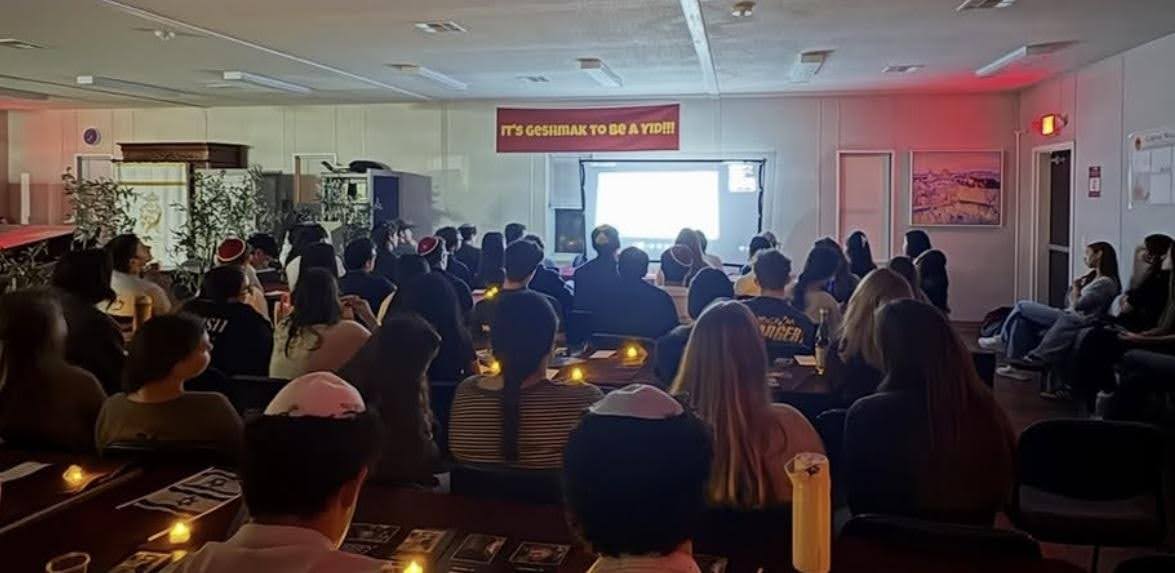
Three years after the Hamas massacre, Jewish students across North America faced a familiar question: would they be allowed to mourn?
On too many campuses, the answer was no. At the University of New Mexico, miniature Israeli flags set out as a memorial were kicked and trampled. At Northwestern, a fire alarm emptied a theater in the middle of a play built on survivor testimony. At UCLA and elsewhere, SJP chapters held events praising “Al-Aqsa Flood,” the name Hamas gives its own atrocity.
Our Fellows refused to let that be the story of the day.
Queen’s University
Students and community members walked through an interactive October 7 exhibition our Fellows helped bring together with Hillel and campus partners. Students could stop at a station for prayer, read the stories of the hostages, and assemble first aid kits in honor of the first responders.
People did not just look. They took part.
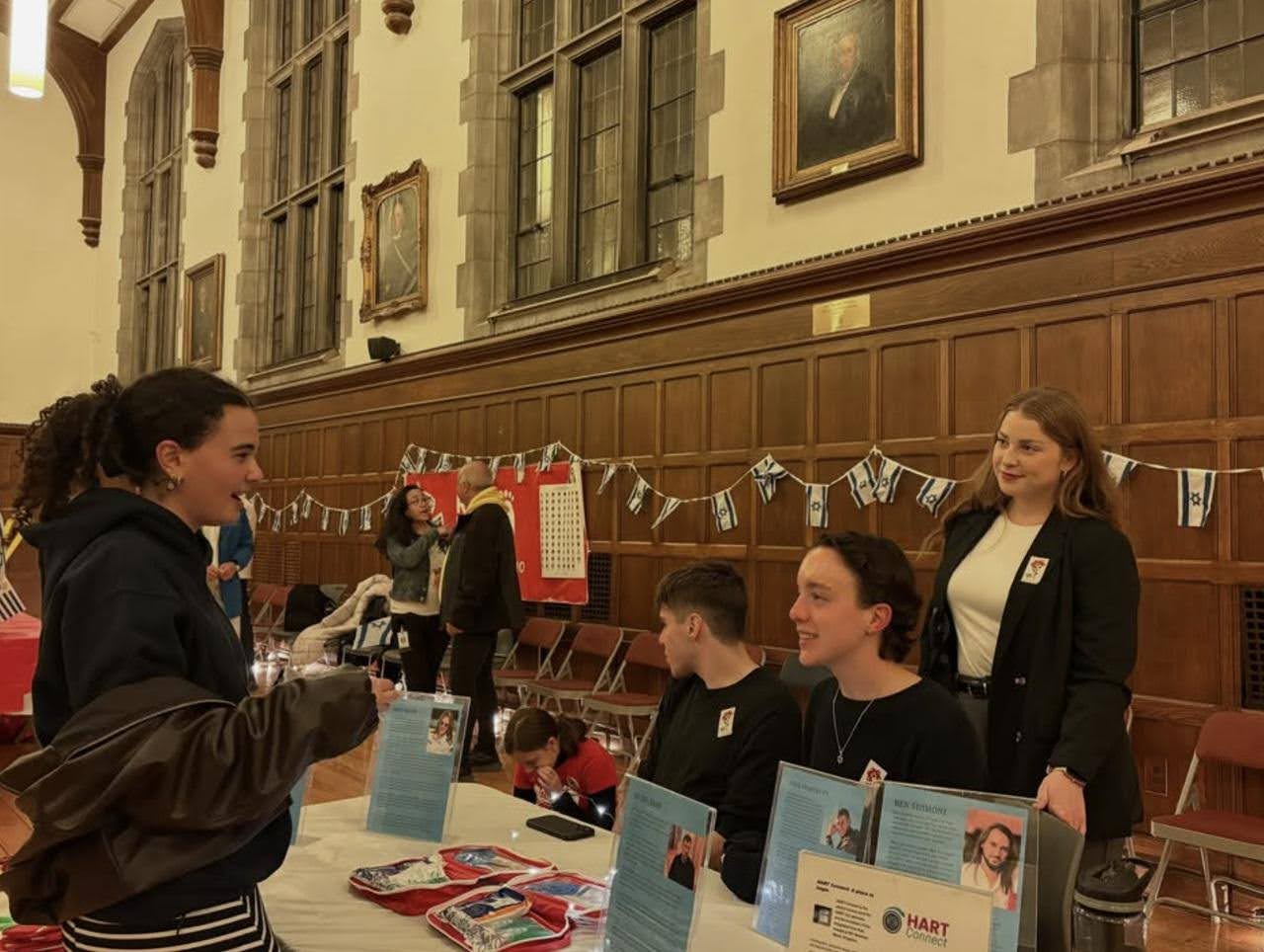
Queen’s University October 7 exhibition
Penn State
At Penn State, a packed room heard Omer Shem-Tov describe the 505 days he spent in Hamas captivity and the faith that carried him through.
That same week, others on campus marched under banners glorifying “resistance.” Against that backdrop, a survivor of Hamas captivity speaking to a full room was an answer in itself.
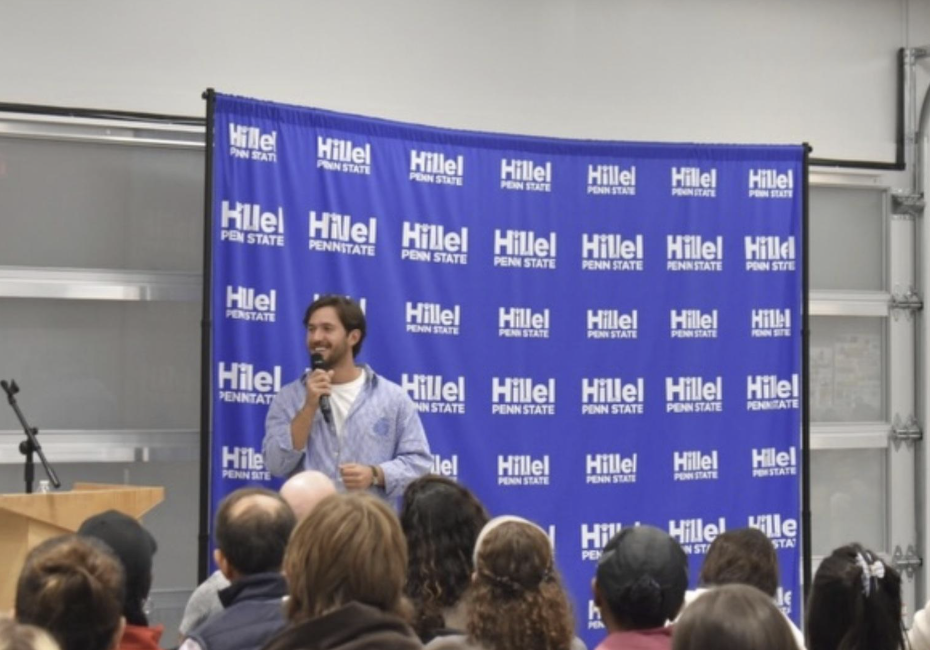
Omer Shem-Tov speaking at Penn State
Florida State
At Florida State, Students Supporting Israel held an October 7 memorial centered on firsthand testimony from someone who lived through the massacre.
Students heard from Lior Auvgang, a former IDF combat paramedic who treated the wounded at the Nova festival before hiding for more than seven hours as terrorists searched the area around him.
At a moment when the facts of October 7 are increasingly distorted, giving students the opportunity to hear directly from someone who was there matters.
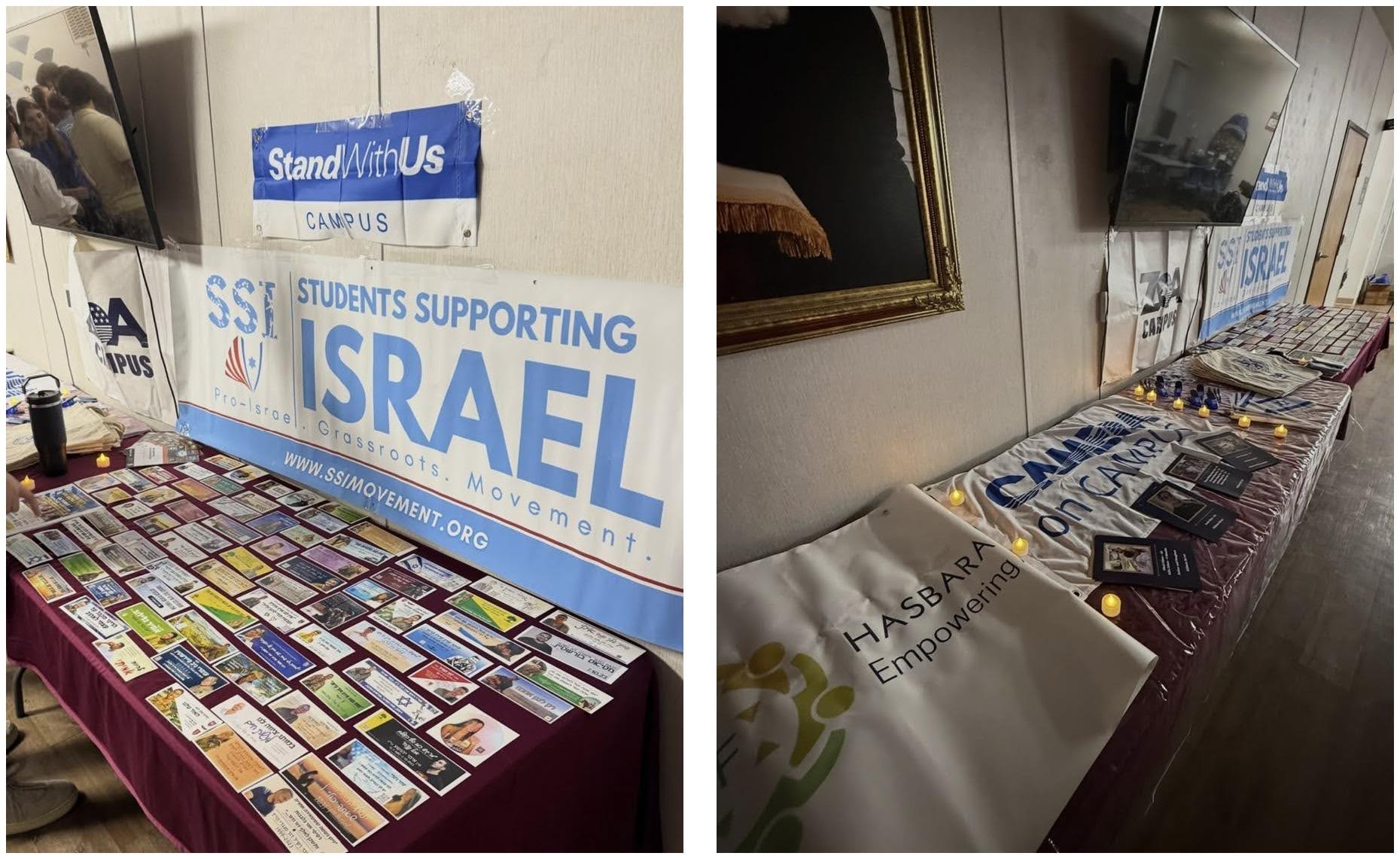
Florida State memorial display and Students Supporting Israel table
Why they were ready
None of this was improvised.
Many of these students have stood at Hostage Square, walked the grounds of the Nova festival, visited communities along the Gaza border, and sat face-to-face with survivors, soldiers, and hostage families in Israel.
That is the heart of Hasbara Fellowships’ training. Fellows see the places they will later be asked to speak about and hear directly from the people who lived through those events. They return knowing how to organize, how to communicate under pressure, and how to bring these voices to other students.
So when memorials were disrupted and the massacre was reframed as “resistance,” our Fellows did not have to improvise. They created spaces for remembrance, brought survivors to campus, and made sure the people who lived through October 7 were heard.
Three years later, it was remembered.